Most businesses I speak to are still at the very early stage of using AI.
They might be using ChatGPT to write the odd email, summarise a document, tidy up some notes, or search for an answer instead of using Google. That is fine. In fact, that is probably the right place to start.
But once you get past the novelty, the better question is not “can AI write this?” or “can AI do this faster?”. The better question is: where does the human still need to be involved?
That is what people mean by “human in the loop”. It sounds a bit technical, but it is actually very simple. AI can help prepare, sort, summarise, suggest and draft. But a person still needs to decide what is right, what is useful, what needs changing, and what should never be sent out in the first place.
“For most small businesses, the win is not replacing people. It is taking one annoying task, making it easier, and keeping enough human judgement in it so it does not go weird.”
Paolo Di Terlizzi, Founder, Refresh Creative
Most AI use is still very normal
A lot of the AI conversation online is about agents, automation, tools talking to tools, and big dramatic changes to the way work happens. That may all be coming. Some of it is already useful. But for most service businesses, the first stage is much more ordinary.
It is the training company that wants to turn course notes into a clearer follow-up email. It is the professional services firm that wants help summarising a client meeting before writing the next proposal. It is the trades business that wants to respond to common enquiries faster without sounding like a robot.
None of this needs to be a massive software project. It starts with the work you are already doing. The repeated jobs. The admin. The little bottlenecks. The things that are too important to ignore, but too boring to keep doing manually every week.
That is where AI can help. But it should not be left to run off on its own.

Where the human still matters
The human bit is not just there to “approve” something at the end. It is there because you understand the business, the client, the tone, the promise, the risk and the little details that a tool will not always understand.
Here are a few simple examples.
| Business type | AI can help with | The human still needs to check |
|---|---|---|
| Training company | Drafting course follow-ups, turning notes into handouts, summarising feedback, creating first-draft learning content | Is the advice correct? Is it suitable for the audience? Does it match the trainer’s real experience? |
| Professional services | Summarising calls, preparing proposal outlines, drafting client updates, turning messy notes into clear documents | Is the context right? Is the tone appropriate? Are we over-promising? Is anything commercially sensitive? |
| Trades or technical services | Replying to common enquiries, turning job notes into customer updates, preparing checklists, creating service page content | Is the diagnosis right? Are the safety details correct? Does this need a proper site visit or expert judgement? |
This is the bit people sometimes miss – AI can produce something that looks finished. That is both useful and dangerous. A bad first draft looks like a bad first draft. You know it needs work.
An AI draft can look polished while still being slightly wrong, slightly bland, or slightly inappropriate. That is why your judgement matters more, not less.
The value is not just in getting AI to create an answer. The value is in knowing whether that answer is good enough, safe enough and useful enough for the real world.
Start with one workflow, not the whole business
If you are at the beginning of using AI, do not start by trying to “transform the business”. That is usually where things get vague, expensive and a bit silly.
Start with one workflow. One repeated task.
One thing that happens every week where someone has to copy, paste, tidy, check, rewrite, summarise or chase the same type of information.
Then look at the steps:
- What comes in?
- What needs to happen to it?
- What does the output need to look like?
- Where could AI help?
- Where must a human check it?
- What should happen if the output is wrong, unclear or incomplete?
That is a much better way to think about AI in a real business.
For example, AI might summarise feedback forms after a training course, but a trainer should still review the themes before anything changes in the course material.
AI might draft a client proposal from meeting notes, but a director should still check the pricing, positioning and promises.
AI might help a cleaning, building or maintenance company turn job notes into a customer update, but a person with proper knowledge should still check the technical details before it goes out.
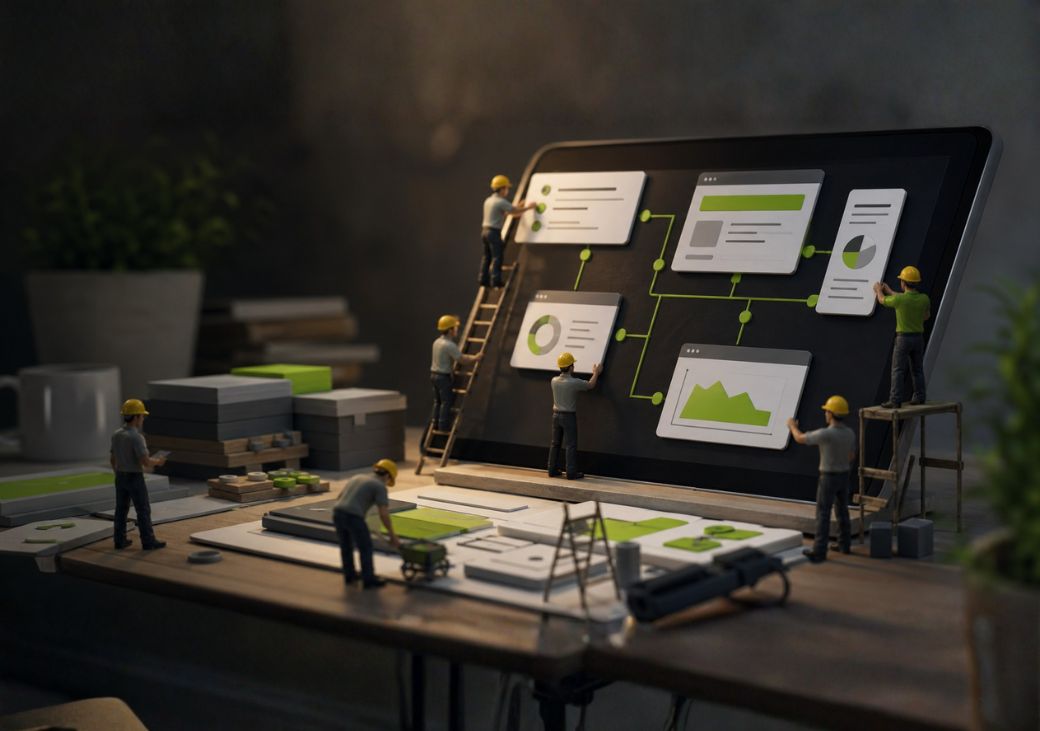
That is not a weakness in the system. That is the system working properly. A good AI workflow does not remove the human. It moves the human to the right part of the process.
That means less time staring at blank pages, less copying between systems, less admin drag, and more time spent on the bit your clients actually value: judgement, experience, service and trust.
So if you are experimenting with AI, keep it simple. Do not ask, “how do we automate everything?” Ask, “what is one awkward task we could make easier, with the right human checkpoint built in?” That is usually where the useful stuff starts.


Comments are closed.