I have been playing with a small side project called LearnCache. The idea is simple: take useful videos, podcasts or audio links, pull out the transcript, then turn them into structured notes that are easier to search, revisit and actually use later.
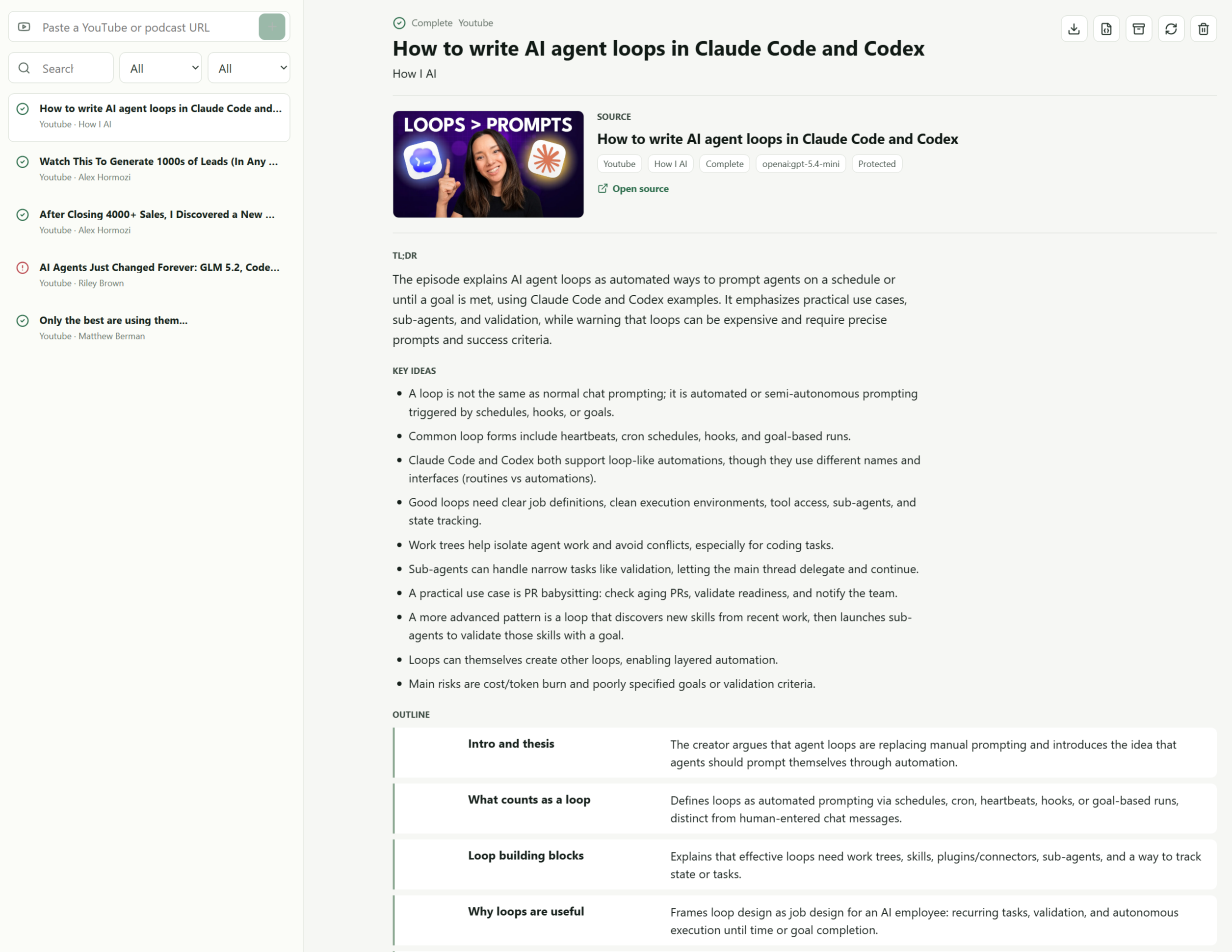
It started from a very normal problem. I watch, listen to and save lots of useful things, but most of it disappears into YouTube history, podcast apps, bookmarks or random notes. LearnCache is an attempt to make that learning more useful. Paste in a link, let it capture or transcribe the content, and it creates a private learning archive with summaries, key ideas, timestamps, tags and follow-up questions.
This is also a good example of how I think about AI generally. The AI is not there to replace the thinking. It does the heavy lifting: capturing, structuring and summarising. The human bit is still the important bit: deciding what matters, what is worth keeping, and how it applies to real work.
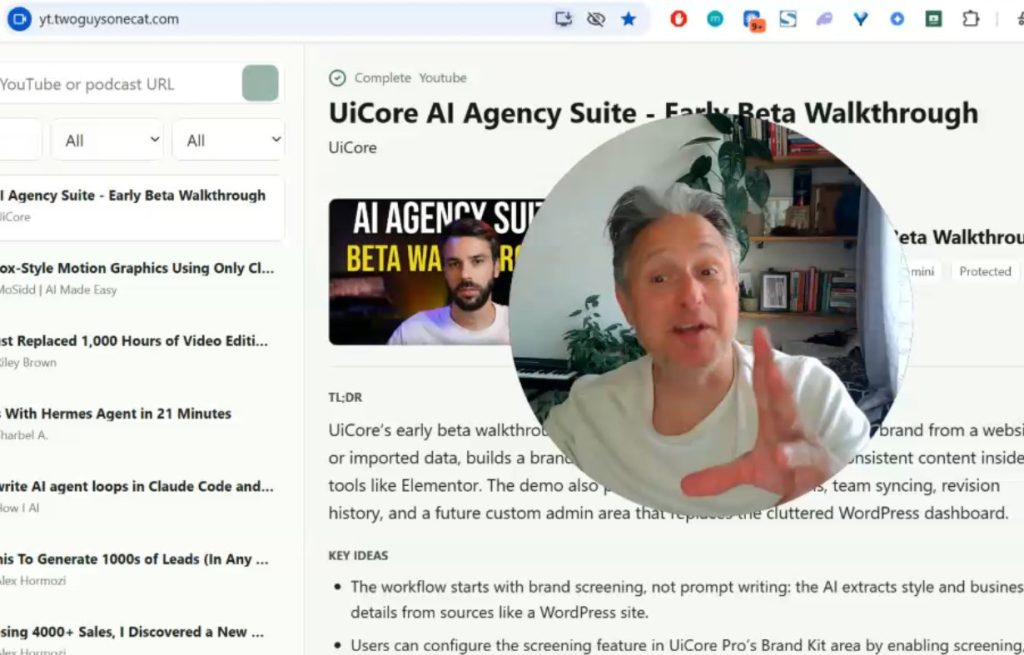
I have included a screenshot of LearnCache in action (above), and below that there is a quick screen recording so you can see the basic flow. It is still an experiment, but a useful one, and exactly the kind of small AI-supported workflow that I think more businesses will start building around their own repeated tasks, knowledge and processes.
Github: https://github.com/paolodit/learncache/
Video: (click to play)
Tech:
Technically, LearnCache can run locally on your own machine or be self-hosted on a VPS, with a Chrome extension for capturing useful YouTube videos straight into your archive. It can use Supadata for YouTube transcript credits, then fall back to OpenAI transcription and summaries when a transcript is not already available.


Comments are closed.